
Gold and Silver IRA Accounts: How They Work in 2026
Gold and silver IRA accounts are self-directed individual retirement accounts that can hold certain physical gold and silver coins or bullion bars under IRS rules. A single qualifying IRA may hold both metals, provided an eligible custodian administers the account and the metals are held in the required custody arrangement.
The important questions are not just which metals to buy. Retirement savers also need to understand IRA eligibility, transfers versus rollovers, annual fees, storage, taxes, and the risks of owning bullion before opening an account.
Quick Answer: What are gold and silver IRA accounts?
A gold and silver IRA is a self-directed IRA that holds eligible physical precious metals rather than relying exclusively on conventional financial holdings. Gold and silver can be combined in one account. The account follows regular IRA tax rules, but physical metals bring additional custody, storage, transaction-cost, and pricing considerations.
- Gold: bullion generally must be at least 99.5% pure, with statutory exceptions for certain coins such as American Gold Eagles.
- Silver: qualifying bullion generally must be at least 99.9% pure.
- Storage: qualifying bullion must remain in the required trustee/custodian possession arrangement, not personal home storage.
- Funding: eligible IRA transfers and retirement-plan rollovers are different from new annual IRA contributions.
Jump to: 5 steps • Eligible coins & bars • Fees • Compare 3 companies • FAQs
Can You Hold Gold and Silver in the Same IRA?
Yes. You do not normally need separate IRAs for gold and silver. If the account’s custodian permits the eligible products, one self-directed precious metals IRA can own both metals. Your account records identify the holdings, and the custodian arranges qualifying custody of the physical coins and bars.
“Gold IRA,” “silver IRA,” and “precious metals IRA” usually describe the type of assets held, not three distinct tax classifications. Traditional, Roth, and some other IRA arrangements may permit eligible precious metals through a custodian that offers them. Many ordinary brokerage IRAs do not offer direct physical bullion ownership.
Gold IRA vs. Silver IRA vs. a Combined Account
| Comparison | Gold-focused IRA | Silver-focused IRA | Gold + silver IRA |
|---|---|---|---|
| Primary holdings | Eligible gold bullion | Eligible silver bullion | Eligible gold and silver |
| Price drivers | Monetary demand, real rates, central-bank activity | Monetary and industrial demand | Exposure to both sets of drivers |
| Storage considerations | Typically greater value per unit of space | More volume for a comparable dollar amount | Custodian and depository policies apply to both |
| Tax framework | Depends on IRA type | Depends on IRA type | Same IRA rules; no separate metal-specific tax break |
Gold and silver can both experience substantial price declines, and neither pays interest or dividends. Holding two metals adds variety within the precious metals category; it does not eliminate concentration risk. For a closer comparison, read our gold IRA vs. silver IRA guide.
Gold and Silver IRAs vs. Brokerage IRAs, ETFs, and Personally Owned Bullion
Gold and silver IRA accounts are one way to hold physical precious metals, but they are not the same as purchasing coins personally or buying a precious-metals fund inside an ordinary brokerage IRA. The practical differences concern legal ownership, access to specific bars and coins, custody, taxes, and costs.
Swipe horizontally to view the complete comparison on a phone.
| Arrangement | What the account or owner holds | Custody and access | Main trade-off |
|---|---|---|---|
| Physical gold and silver IRA | IRA-owned, eligible coins and bullion bars | IRA trustee or custodian and qualifying metals custody | Physical holdings with custodian, storage, and transaction costs |
| Conventional brokerage IRA | Financial assets supported by the brokerage, such as funds or securities | Brokerage administration; direct bullion ownership often unavailable | Convenient securities access, but not possession of specified IRA bullion |
| Gold or silver exchange-traded product inside an IRA | Shares or units of a particular fund or trust, not personally selected coins | Brokerage holds the security; the fund’s underlying structure varies | Market-traded exposure with product expenses and different ownership rights |
| Gold and silver purchased outside an IRA | Personally owned physical coins and bars | Personal custody or privately arranged storage | More control of possession, without IRA-specific tax treatment |
The tax treatment of an exchange-traded product depends on its legal structure and where it is held; not every fund is identical. Similarly, buying physical metals outside an IRA does not create a tax-deferred retirement account. For more context, see our guide to buying gold and silver for retirement.
How Gold and Silver IRA Accounts Work: 5 Steps
Although the account holds physical assets, the process resembles opening and funding other retirement accounts in several important ways. The major difference is the additional coordination among the custodian, metals dealer, and depository.
- Choose a self-directed IRA custodian. Confirm that the custodian permits physical gold and silver, ask for a full written fee schedule, and verify how account records and statements are supplied.
- Establish and fund the account. Depending on eligibility, funding may involve a direct IRA-to-IRA transfer, an eligible retirement-plan rollover, or a new contribution subject to annual limits.
- Select eligible coins or bars. Compare the exact product, metal weight, purity, selling price, and premium over the metal’s current market price before authorizing a purchase.
- Arrange payment and qualifying custody. The custodian handles the IRA transaction and coordinates delivery to an appropriate depository under the account’s custody arrangement.
- Monitor statements, fees, and distribution needs. Review holdings and storage confirmations periodically, including any future required minimum distributions for the account type.
For a detailed eligibility walkthrough, see can I set up an IRA based on silver? and who can open a gold and silver IRA?.
Who Does What: Metals Dealer, IRA Custodian, and Depository?
A self-directed IRA holding physical bullion usually involves three distinct parties. Knowing their responsibilities makes it easier to compare advertisements with the legal structure of the account.
| Party | Primary job | Document to request |
|---|---|---|
| Precious metals dealer | Offers eligible gold or silver products and provides a written purchase quote | Itemized product description and trade confirmation |
| IRA trustee / custodian | Establishes and administers the IRA, processes authorized transactions, and maintains records | Custodial agreement, fee schedule, account statement |
| Metals depository | Safeguards physical bullion under the trustee/custody arrangement | Storage terms, coverage details, holdings records |
Key point: A precious metals broker is not automatically the IRA custodian. The company that helps you choose coins may coordinate with a separate trustee and storage facility. Confirm the relationships, product acceptance, and account ownership before money moves.
Funding a Gold and Silver IRA: Transfers, Rollovers, and Contributions
The phrase “roll over my IRA” is often used loosely, but transfers and rollovers have different IRS rules. Understanding the distinction can help avoid an unexpected distribution or missed deadline.
| Funding method | Typical use | Important distinction |
|---|---|---|
| Trustee-to-trustee IRA transfer | Moving eligible assets between IRAs | Funds move directly between trustees; not subject to the one-IRA-rollover-per-year limit. |
| Direct plan rollover | Moving an eligible 401(k) or similar plan balance to an IRA | Plan sends payment directly to the receiving IRA; availability depends on plan rules and eligibility. |
| 60-day rollover | Receiving a qualifying retirement distribution and redepositing it | Deadline, withholding, and in some cases one-per-12-month restrictions can apply. |
| New contribution | Adding eligible current-year funds | Annual IRA contribution and income-related rules apply; separate from eligible rollover amounts. |
The IRS generally allows direct trustee-to-trustee IRA transfers without the once-per-year IRA rollover restriction. A payment made to you may trigger the 60-day rule, withholding, or other consequences. Review the IRS rollover rules, and see our guide to rolling over a 401(k) or an existing IRA.
2026 IRA Contribution Limits
For 2026, the standard combined annual contribution limit for traditional and Roth IRAs is $7,500, or $8,600 for eligible individuals age 50 or older, subject to compensation, income, and account-specific rules. Eligible rollovers and trustee-to-trustee transfers are not ordinary new annual IRA contributions. Check the applicable rules before funding the account.
Source: IRS, October 22, 2026: IRA contribution limits and tax treatment.
Traditional, Roth, and Other IRA Structures
A traditional IRA generally defers tax on qualifying amounts until distribution, subject to deduction and basis rules. A Roth IRA is funded under different tax rules, and qualified Roth distributions can be tax-free. SEP and certain other arrangements have their own eligibility and funding requirements. Physical metals do not create a special exemption from the tax rules of the underlying account.
Required minimum distribution (RMD) rules generally apply to traditional IRAs once the account owner reaches the applicable starting age. Roth IRAs have different lifetime RMD rules for original owners. Whether a distribution is satisfied with cash after sale or with an in-kind metals distribution, its tax treatment and valuation require attention. Read how gold and silver IRA distributions are taxed.
IRS Rules: What Gold and Silver Can an IRA Hold?
Not every gold or silver coin is an IRA-eligible product. Federal law generally treats metals and coins as collectibles, with exceptions for specified coins and bullion meeting statutory standards. The product must qualify, and the required custody conditions must be observed.
| Metal | General bullion fineness | Common examples to verify with custodian |
|---|---|---|
| Gold | 99.5% (.995) | American Gold Eagles (specific statutory coin exception); Canadian Gold Maple Leafs; qualifying bars |
| Silver | 99.9% (.999) | American Silver Eagles; Canadian Silver Maple Leafs; qualifying bars |
| Platinum | 99.95% (.9995) | Certain qualifying coins and bars |
| Palladium | 99.95% (.9995) | Qualifying bullion products |
Important exception: The American Gold Eagle is generally 91.67% gold, but qualifying U.S. gold coins are separately permitted by statute. Purity alone is therefore not the only eligibility test. Conversely, a coin advertised as “rare,” “collectible,” “proof,” or “graded” should not be assumed eligible just because it contains precious metal. Verify the exact product with the IRA custodian before purchase.
See the IRS explanation of IRC Section 408(m) and our detailed guide, what does IRA-eligible silver mean?
Gold Coins Commonly Considered for an IRA: Mint and Fineness
The coins below illustrate why mint of origin, purity, and the exact product matter. Some U.S. coins qualify under a specific statutory exception; other issues are ordinarily assessed under the bullion rules. A product shown here is an example to verify, not a blanket IRS approval of every version, grade, or year.
Swipe across the comparison table on smaller screens.
| Gold coin | Mint of origin | Typical fineness | Important IRA check |
|---|---|---|---|
| American Gold Eagle | United States Mint | .9167 (22 karat) | Special federal coin exception; do not apply the ordinary .995 gold-bullion threshold to this specific coin |
| American Gold Buffalo | United States Mint | .9999 | Verify the specific bullion issue, custodian acceptance, and custody |
| Canadian Gold Maple Leaf | Royal Canadian Mint | .9999 for modern bullion issues | Verify exact issue and accepted bullion category |
| Modern gold Britannia | The Royal Mint (United Kingdom) | .9999 from 2013 | Older issues have different fineness; year matters |
Mint references: United States Mint bullion programs; Royal Canadian Mint Maple Leaf bullion; and Royal Mint Britannia purity history.
Silver Coins Commonly Considered for an IRA: Mint and Fineness
Silver bullion generally needs at least .999 fineness to fit the applicable bullion standard. These frequently discussed coin series offer distinct ways to verify their origin and specifications:
| Silver coin | Mint of origin | Typical fineness | Important IRA check |
|---|---|---|---|
| American Silver Eagle | United States Mint | .999 | Identified U.S. silver coin exception; verify correct custody and product pricing |
| Canadian Silver Maple Leaf | Royal Canadian Mint | .9999 | Common bullion candidate; confirm custodial acceptance |
| Austrian Silver Philharmonic | Austrian Mint | .999 | Check exact bullion issue, authenticity, and storage arrangement |
| Modern silver Britannia | The Royal Mint (United Kingdom) | .999 from 2013 | Earlier .958-fine silver issues are below the usual .999 bullion threshold |
For more detailed coin comparisons and proof-coin considerations, see our fully revised IRA-eligible silver guide. The Royal Canadian Mint confirms the Silver Maple Leaf’s .9999 fineness.
What About IRA Gold Bars and Silver Bars?
Qualifying bars are also commonly available, but purity and custody—not a famous brand alone—determine eligibility. Below are typical product descriptions you might encounter when requesting a quote. These are examples for verification, not an IRS-maintained approved-bar list.
| Product example | Common origin / producer type | Purity to verify | Purchase check |
|---|---|---|---|
| 1 oz gold bar | Established refinery such as PAMP Suisse or Valcambi (Switzerland) | Usually .9999; gold bullion threshold generally .995 | Exact refiner, assay, serial information where applicable, custodian acceptance |
| 10 oz or 100 oz silver bar | Recognized private refiner or national mint | At least .999 for typical qualifying silver bullion | Product markings, weight, fineness, dealer spread, and custody requirements |
| Kilogram silver bar | Recognized bullion refiner | At least .999 | Custodian acceptance, minimum purchase rules, and potential sale size |
Some bars cost less per ounce in dealer premium than popular coins, but that does not guarantee cheaper liquidation. Also, terms such as “LBMA-accredited,” “COMEX deliverable,” and “ISO-certified” are not standalone IRS certificates for an IRA purchase. Ask the custodian whether it accepts the exact bar before authorizing a trade.
Can You Store IRA Gold and Silver at Home?
Do not assume home storage is allowed. For the bullion exception, the IRS specifically requires possession by a bank or IRS-approved nonbank trustee. A personal safe, home vault, or IRA-owned LLC structure does not automatically satisfy that rule. Improper custody can have significant tax consequences.
The custodian and storage provider are separate functions: the custodian administers the IRA and its records, while a depository physically safeguards the metals under the approved arrangement. Ask whether storage is segregated or non-segregated, how insurance applies, and how holdings are documented.
Further reading: IRS IRA questions, including home storage; why IRA metals cannot simply be kept at home.
Gold and Silver IRA Fees: What Does an Account Cost?
Gold and silver IRA accounts have costs beyond the quoted metal price. An apparently small difference in the price of a coin can matter as much as the published annual account fee. Ask for a written, itemized estimate before transferring funds or authorizing a trade.
| Potential cost | What to ask |
|---|---|
| One-time account setup | Who charges it? Is it waived for qualifying accounts? |
| Annual administration | Flat fee or asset-based fee? Any statement or transaction charges? |
| Depository storage | Segregated versus non-segregated pricing; insurance and withdrawal handling. |
| Metals purchase premium | How far above the contemporaneous metal market price is the actual purchase price? |
| Sale / buyback spread | What price might the dealer offer to repurchase the same product today? |
| Distribution and shipping | What happens if you sell, transfer, or take an in-kind distribution? |
For example, an annual custody and storage charge of $225 equals 0.90% of a $25,000 account before any metal price movement or purchase premium. The same flat dollar charge would equal 0.225% of $100,000. These are simple fee illustrations, not promised account costs; actual arrangements vary.
What Do Flat Annual Fees Mean at Different Account Sizes?
Flat administration and storage charges affect smaller accounts proportionally more than larger accounts. Consider the illustration below using $225 in hypothetical annual combined charges—not a quote, guarantee, or prediction for any provider.
| Example IRA value | Example yearly admin + storage | Share of account value | Costs not included |
|---|---|---|---|
| $25,000 | $225 | 0.90% | Dealer premium, resale spread, setup and transaction charges |
| $50,000 | $225 | 0.45% | Same additional cost categories |
| $100,000 | $225 | 0.225% | Same additional cost categories |
For comparison, a purely hypothetical 3% dealer markup on $50,000 of metal value would equal $1,500 at purchase, before any storage or eventual resale spread. That 3% is an example calculation, not a statement of typical premiums or any featured company’s pricing. Ask for both today’s purchase quote and today’s buyback quote for the same identifiable product.
What Changes for a Larger Gold and Silver IRA Balance?
At $100,000 or more, the proportionate cost of flat annual administration fees may be lower, but the absolute dollar cost of dealer markups, volatility, and the resale spread can become larger. Ask whether account-size promotions genuinely reduce total cost, whether segregated storage is necessary for your objectives, and whether you can sell just part of a holding without excessive transaction charges.
A promised fee waiver is not a substitute for a transparent metal price. Compare the full trade confirmation, including weight, fineness, total dollars paid, and the custodian’s written fee schedule.
Also see what fees are associated with a metals IRA?
Potential Benefits and Risks of Physical Gold and Silver IRAs
Precious metals can serve as a distinct category of retirement holdings. Their appeal often relates to physical ownership, limited supply, and potential diversification. However, the value of gold or silver can fall for extended periods, including during some periods of inflation or financial stress.
| Potential advantages | Trade-offs and risks |
|---|---|
| Physical gold and silver may behave differently from stocks and bonds. | Metal prices are volatile; diversification does not assure a gain. |
| The underlying IRA may retain tax-deferred or qualifying Roth treatment. | Taxes, distribution rules, and prohibited-transaction restrictions still apply. |
| Coins and bars provide direct exposure to specific precious metals. | Bullion produces no dividends or interest, while custody costs continue. |
| Combining metals offers more than one source of demand. | Both metals can decline together, and silver can be particularly volatile. |
There is no universal percentage of retirement savings that belongs in precious metals. The appropriate decision depends on personal finances, time horizon, liquidity needs, and tolerance for losses. Explore are gold and silver IRAs a good idea? and are gold and silver IRAs risk free?
Common Gold and Silver IRA Mistakes and How to Avoid Them
Some account problems arise before a single coin is purchased. The following checks can prevent common misunderstandings without relying on claims about future metal prices.
| Potential mistake | Why it matters | Better question |
|---|---|---|
| Choosing metal based only on an “IRA approved” label | The exact product and custody must satisfy the applicable rules | Will my IRA trustee accept this exact issue and product? |
| Confusing a transfer with an indirect rollover | Timing and tax rules can differ | Can the funds move directly between institutions? |
| Comparing only annual account fees | Dealer premiums and buyback spreads may be substantial | What would you pay to buy this product back today? |
| Assuming home storage is standard IRA custody | Physical possession rules are specific and violations may have tax consequences | Who legally holds the metals on the IRA’s behalf? |
| Treating a bonus promotion as a guaranteed benefit | Qualifying terms, price and metal selection affect the economics | Can I review the full written terms before placing an order? |
The SEC’s investor alert about self-directed IRAs explains why alternative assets require careful due diligence. For a focused risk discussion, read our gold and silver IRA risks guide.
Gold and Silver IRA Companies to Compare in 2026
After you understand how gold and silver IRA accounts work, compare companies on practical questions: education, minimum purchase requirements, accessible support, published or documented costs, eligible product choices, and the custody arrangements they help coordinate.
Comparison methodology: The three featured companies are Goldco, Augusta Precious Metals, and GoldenCrest Metals. We compare each company’s publicly described precious-metals IRA assistance, published or stated minimums, and documented fee examples. We do not claim to have audited every firm, independently verified every customer review, or measured a standardized rollover time. The companies may change their terms. Our site can earn referral compensation, which can influence placement.
Unlike a dealer’s price for a coin, custodian and depository charges are typically billed by separate organizations. The table distinguishes known published examples from costs that require a current written quote.
Editorial disclosure: Silver IRA Accounts is an independent educational and comparison website. We may receive compensation when readers use certain links or contact a featured company. This can influence which providers appear here and their placement. Our summaries are not personalized financial, tax, or legal advice. See our full disclosure.
Swipe across the provider comparison on mobile. Figures below are published examples, not a binding quote.
| Company | IRA minimum* | One-time setup* | Annual administration* | Annual storage* | Key service / follow-up |
|---|---|---|---|---|---|
| Goldco #1 Featured Choice |
Generally $25,000 | $50 example | $125 example | $100 non-segregated / $150 segregated examples | Educational kit + direct phone assistance; (855) 810-1630 |
| Augusta Precious Metals Education-first alternative |
$50,000 | $50 example | $125 example | $100 standard example; other options may differ | Educational web conference and one-on-one explanation of account mechanics |
| GoldenCrest Metals Additional option |
$25,000 | Request custodian quote | Request custodian quote | Request depository quote | Written metal pricing; Entrust Group / Delaware Depository arrangements described |
*Company minimums and fee examples are subject to change and may depend on your custodian, storage method, and qualifying promotions. Dealer premiums and repurchase spreads are additional and are not comparable from this table alone. Confirm written current pricing before proceeding. Goldco cost examples refer to a gold IRA and should be confirmed for a particular gold-and-silver account.
#1 Featured Choice: Goldco

Goldco is a precious metals broker that helps customers explore eligible physical gold and silver purchases, including purchases for qualifying self-directed IRAs. Its educational kit and direct phone assistance can be useful when you want to discuss account setup, eligible products, pricing, and the rollover process with a representative.
Goldco is not an IRA custodian or financial advisory firm. The self-directed IRA is established and administered through a separate custodian; qualified storage is handled under the applicable custody arrangement. Before proceeding, ask who will administer the account and request the full schedule of fees.
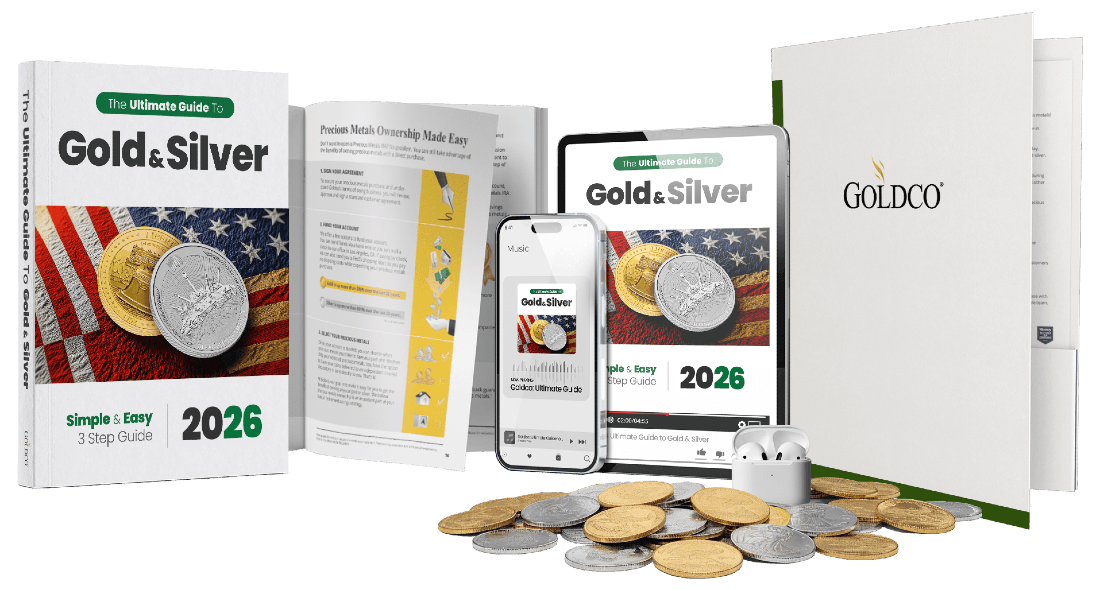
Request Your Free Goldco Information Kit
Prefer to speak with a Goldco specialist?
Call (855) 810-1630
Goldco Account Fees and Minimums
Goldco’s published cost guide states a $50 one-time setup fee, $125 annual account administration fee, and annual depository storage of approximately $100 for non-segregated or $150 for segregated storage. It also indicates that a $25,000 starting amount is generally requested for a precious metals IRA. Actual costs depend on the custodian, depository, products, and current arrangements. Verify all figures in writing.
Ask for the exact purchase price and the contemporaneous repurchase price of any proposed coin or bar. The difference between those prices can be more consequential than the published flat annual fees.
Goldco Promotion: Up to 10% in Bonus Silver*
Goldco publicly advertises a conditional bonus-silver offer for qualifying purchases. Its published terms describe up to 5% on qualifying orders of $50,000–$99,999, and up to 10% on qualifying orders of $100,000 or more. Eligibility, eligible products, combinations with other offers, and delivery arrangements must be confirmed with Goldco.
*The offer applies only to qualified orders and can be modified or discontinued. The stated percentages are not guaranteed account returns. Additional terms apply; review Goldco’s written promotion terms and customer agreement. Goldco does not provide financial or tax advice. Call (855) 810-1630 for current details.
Or call (855) 810-1630 to ask questions directly.
#2 Education-First Alternative: Augusta Precious Metals

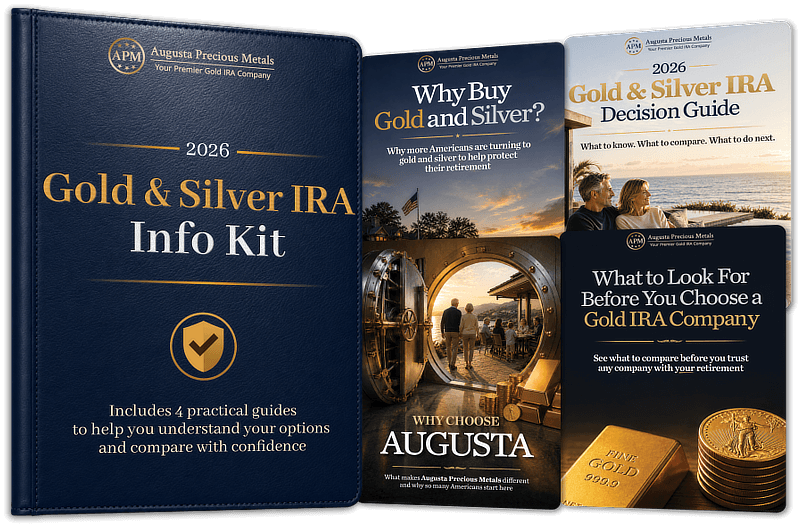
Augusta Precious Metals emphasizes an education-first approach, including explanations of precious metals IRA mechanics, applicable risks, and its account setup process. The company identifies salaried, non-commissioned educators and offers an educational web conference. Augusta is a metals dealer that works with separate IRA custody and storage providers.
Its published partner information lists a $50,000 minimum and a standard fee example of $50 to open an IRA, $125 per year for administration, and $100 per year for storage. Promotional fee waivers may apply, so ask for the current written offer and duration rather than assuming any fee will be waived indefinitely.
#3 Additional Option: GoldenCrest Metals

GoldenCrest Metals is another precious metals provider to include in a side-by-side comparison. GoldenCrest’s current published information lists a $25,000 minimum for gold or silver IRAs and a separate $10,000 minimum for direct cash purchases. Its website describes coordination with Entrust Group for IRA custody and Delaware Depository for metals storage. Confirm current minimums, written fees, metal prices, and qualifying promotional terms directly before proceeding.

How to Choose a Gold and Silver IRA Company
“Best” is not a universal designation. The right choice depends on the services you want, the amount involved, and the written terms you receive. Before opening a gold and silver IRA, use this practical checklist:
- Confirm each company’s role: distinguish the metals dealer from the actual IRA custodian and storage provider.
- Compare itemized fees: request the setup fee, annual administration, storage, transactions, shipping, and distribution costs.
- Compare actual metal quotes: ask for a specific product’s sale price, weight, and current repurchase price.
- Verify eligible products: get confirmation from the custodian before authorizing any purchase.
- Review company background: consult independently maintained complaint and customer-review records, recognizing that ratings can change.
- Understand promotions: obtain eligibility terms in writing; bonus metals or waived fees do not erase purchase premiums or price risk.
- Plan for distributions: ask how future sales, transfers, RMDs, and delivery of coins or bars would work.
Five Written Questions Before You Choose a Company
- Who is the actual IRA trustee or custodian? Request the legal entity’s name and current fee schedule.
- Which coins and bars will the custodian accept? Ask for exact descriptions and fineness.
- What is the total dollar price, including dealer markup? Compare the price against a timestamped reference quote.
- What is the same-day repurchase quote? Distinguish a buyback policy from an assured future sale price.
- What happens at distribution? Ask about sales, shipping, in-kind delivery, valuations, and reporting.
Frequently Asked Questions About Gold and Silver IRA Accounts
Can I own gold and silver in one IRA account?
Yes. A self-directed IRA can generally hold eligible physical gold and silver in the same account when the custodian supports both metals and proper custody is maintained.
What is the difference between a gold IRA and a silver IRA?
The primary difference is the metal held. Both generally use the same underlying IRA tax framework; gold and silver have different price drivers, premiums, and physical storage characteristics. See our full comparison.
Can I move an existing IRA or 401(k) into a gold and silver IRA?
Often, yes, if the funds and plan are eligible. IRA-to-IRA trustee transfers and direct rollovers from qualified plans can move funds without the account owner receiving them personally. Eligibility depends on account and plan rules; indirect rollovers carry additional requirements.
What is the minimum to open a gold and silver IRA?
There is no single IRS-imposed universal dollar minimum specifically for owning bullion in an IRA. Dealers and custodians may set their own minimum account or purchase amounts. Goldco generally publishes $25,000, while other companies may use different thresholds. Check the current written requirements for your selected arrangement.
How much can I contribute to a gold and silver IRA in 2026?
For 2026, the general annual traditional/Roth IRA contribution limit is $7,500, or $8,600 for eligible individuals age 50 or older, subject to applicable rules. Eligible rollovers and direct trustee-to-trustee transfers are different from annual contributions.
Which gold and silver coins are IRA eligible?
Qualifying examples can include American Gold Eagles, American Silver Eagles, certain Canadian Maple Leafs, and bullion that meets applicable IRS standards. Approval depends on the precise product and custody arrangement. Not every coin advertised as precious metal bullion qualifies.
Can I keep IRA gold or silver in my home safe?
Do not treat home storage as compliant. The IRS requires qualifying bullion to be kept in the possession of a bank or approved nonbank trustee, and self-dealing or improper custody can cause tax problems.
Are gold and silver IRAs tax-free?
Not automatically. Traditional and Roth arrangements follow their respective IRA tax rules. Qualified Roth distributions may be tax-free, while traditional IRA distributions are generally taxable to the extent they contain pre-tax amounts. Gold and silver holdings do not create an additional tax exemption.
What are the main disadvantages of gold and silver IRA accounts?
Potential disadvantages include metal price volatility, dealer premiums and buyback spreads, ongoing custody and storage fees, no dividend or interest income from bullion, and extra work when taking distributions. Read our risk overview.
Can I take physical possession of my metals when I retire?
An IRA owner may be able to request an in-kind distribution of metals under the account’s procedures. A distribution can be taxable and may trigger additional tax if taken early without an applicable exception. Reaching retirement age does not, by itself, make every distribution tax-free. Read our guide to taking possession of coins and bars.
Are IRA gold and silver accounts the same type of retirement account?
Generally, yes. “Gold IRA” and “silver IRA” describe the precious metals held rather than a distinct tax category. One self-directed IRA may hold both eligible metals when the custodian supports them.
Does the IRS publish an official list of all IRA-approved gold and silver coins?
No universal retailer-style product list should be treated as an IRS certificate. Federal law identifies certain coins and sets rules for qualifying bullion. Confirm the exact product and required custody with the trustee before making an IRA purchase.
Are physical gold and silver IRAs different from gold or silver ETFs?
Yes. A metals IRA holding bullion owns qualifying physical coins or bars under an IRA custody arrangement. An exchange-traded product is a security or fund interest with its own structure and fees; buying its shares does not mean the IRA owns the specific coins you select.
Can an active 401(k) always be transferred to a precious metals IRA?
No. Whether an employer plan permits an eligible distribution depends on its terms and your circumstances. Many active plans restrict in-service rollovers. Check with the plan administrator before starting an IRA rollover.
Is a lower annual fee always the least expensive option?
No. The dealer’s purchase premium, the price offered when the metal is sold, transaction charges, and storage terms also matter. Request written buy and sell quotes for the same product together with the custodial fee schedule.
Final Checklist: Research the Account Before Choosing the Metals
A carefully structured gold and silver IRA account starts with understanding eligibility, choosing an appropriate self-directed IRA custodian, checking IRS-approved products, comparing the complete cost of ownership, and arranging qualifying storage. Gold and silver can fit within one IRA, but neither tax advantages nor physical ownership removes the possibility of loss.
If you would like to compare a metals dealer’s educational materials and discuss how the process works, Goldco offers a gold and silver information kit and phone-based assistance. Ask about account administration, eligible products, current fees, and the written terms of any promotion before making a decision.
Get the Goldco Gold and Silver IRA Kit
Questions? Call Goldco at (855) 810-1630
Important: Content is for general education only and is not individualized financial, legal, or tax guidance. Precious metals prices fluctuate, purchases may lose value, and rules and company terms may change. Consult appropriately qualified professionals about your personal circumstances. Review our affiliate disclosure.